Surrogacy for Gay Dads · Cancún & Mexico City

Gay Surrogacy in Mexico: Two Dads, One Birth Certificate

A fully legal, compensated surrogacy program for gay couples and single fathers from the United States and Canada, with both your names on the birth certificate and a closed, all-inclusive price.

The short answer

Yes, it is legal, it works for two dads, and it costs about half of a U.S. program

Gay surrogacy in Mexico works medically and legally the same way it does for any intended parents. You pick an egg donor, decide whose sperm creates the embryos, a screened surrogate carries the pregnancy, and a federal court order called the Amparo makes sure the birth certificate comes out with both your names on it and nobody else's.

Same-sex couples are a large part of the families we work with, from Vancouver, Calgary and Toronto to New York, Chicago and Miami. This page walks through how it works, what it costs, and how you bring your baby home.

Book a Free Consultation
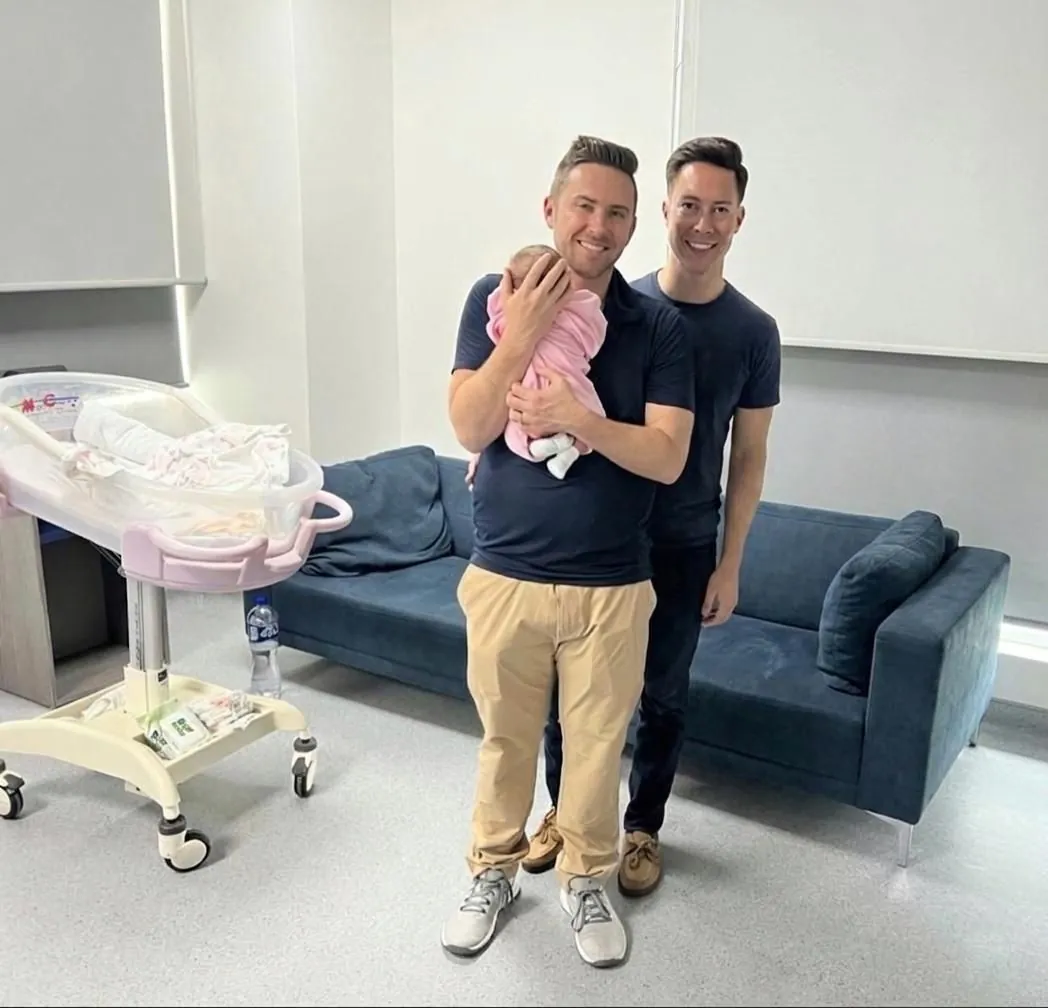
Two fathers holding their newborn baby after a surrogacy program in Mexico
Two dads with their newborn, a few days after the Amparo birth certificate was issued in Cancún.
Why Mexico

Why so many gay intended parents from the U.S. and Canada choose Mexico

Most couples start their research at home and run into one of two walls. In Canada, surrogacy must be altruistic: a surrogate can be reimbursed but not compensated, so waitlists for a Canadian surrogate routinely pass two years. In the United States, compensated surrogacy is legal in most states, but a full program with an egg donor commonly reaches $150,000 to $200,000.

Mexico offers a third path: a legal, compensated surrogacy program, a few hours' flight from home, at roughly a third to half of a U.S. program, with medical care in our own clinic in Cancún and Mexico City.

United StatesCanadaMexico with FSC
Compensated surrogacyLegal in most statesNot permitted, altruistic onlyLegal, protected by the 2021 Supreme Court ruling
Wait for a surrogateMonths, varies by agencyOften more than two yearsNo long waiting lists
Typical full program with egg donor$150,000 to $200,000Lower fees, but long waits and travel across provincesClosed all-inclusive price, published on our Programs page
Parentage for both dadsPre-birth order, depends on the stateDeclaration of parentage, depends on the provinceAmparo: both fathers on the birth certificate before the birth
Is it legal?

The 2021 ruling, and why the Amparo is what makes it real

In 2021 Mexico's Supreme Court ruled that compensated surrogacy is a protected reproductive right, and that state laws restricting it to heterosexual married couples are unconstitutional. That opened surrogacy to same-sex couples and single parents nationwide.

Mexico still has no single federal surrogacy law, so each state keeps its own civil code. Rather than trusting a registry clerk to apply the ruling correctly, every FSC program files an Amparo: a federal constitutional order that recognizes you as the parents and instructs the Civil Registry to issue the birth certificate in your names, before the birth ever happens.

How the Amparo protects you →
What the birth certificate says. Both fathers, by name. No mother field, no surrogate's name, no adoption afterwards for the non-biological dad. That clean document is what your embassy sees when you apply for your baby's citizenship and passport.
What it does not depend on. Your marital status, which of you is the biological father, or which state's older statute is still on the books. The Amparo resolves all three.
How it works

The path for two dads, step by step

1

Free consultation and medical review

We go through your situation, your timeline and the program that fits. If you already have embryos at a clinic anywhere in the world, the FET program picks up from there.

2

Choose your egg donor

You review our donor database together: medical history, ancestry, education, childhood photos. Donors are screened medically and psychologically before they ever appear in the database.

3

Decide whose sperm, or both

One partner can fertilize all the eggs, or you can split them so each of you has a biological link to at least one embryo. Embryos are created by IVF in our own clinic.

4

Matching and embryo transfer

Your surrogate is matched without long waits, fully informed and screened. The embryo is transferred in our clinic, and pregnancy is confirmed at ten weeks.

5

Pregnancy, with the Amparo in motion

Prenatal care, updates at every milestone, and the Amparo filed during the pregnancy so the legal work is done before the delivery.

6

Birth, birth certificate, flight home

Your baby is born in a private hospital. The birth certificate is issued in your names, typically within two weeks in Cancún, and you take it to your embassy for the passport.

What it costs

Closed prices, the Amparo included, paid by milestones

For two dads the cost is driven by four things: the egg donor, IVF and embryo creation, the surrogate's compensation and care, and the legal process. Many agencies quote a base price and add each of those later. We publish one closed, all-inclusive price per program, with the Amparo included, and you pay it in installments tied to medical milestones.

Two dads usually fit our Complete IVF Surrogacy program. If you already have embryos, the FET program costs less because the IVF work is done. Families who want a contractual guarantee choose the Guaranteed Live Birth program. The current figures for all three are on our Programs page.

See programs and prices →
Compare before you decide

Put every quote side by side

Our free calculator lets you enter what each program has told you, the fees, the days in Mexico and your daily costs, and adds it up for you. No sign-up, no email.

Open the calculator →

Want the full budget logic first? Read How Much Does Surrogacy in Mexico Cost.

Going home

From the birth certificate to your baby's passport

U.S. dads

You apply for the Consular Report of Birth Abroad and the first passport together at the U.S. Embassy or a consulate, mostly online. You bring the birth certificate, the Amparo order, the notarized agreement, the medical records and your passports.

Canadian dads

You apply for citizenship and the passport at the same time through the Embassy of Canada in Mexico. The embassy asks you to email its consular section first and not to book flights until the citizenship assessment arrives; IRCC in Canada makes the decision.

How long you stay

It depends on the state, how much of the Amparo was completed before the birth, and your embassy's appointments. Our guide covers the whole sequence week by week. Read After the Birth →

Official checklists for both countries are collected on our Information by Embassy page.

Your situation

Built for the families who actually come to us

Single dads

The same program with one name on the birth certificate. What the process looks like for a single father →

HIV+ dads

Sperm washing and a PCR test on the washed sample before fertilization, so the surrogate is never exposed. Our HIV program →

Two dads, two babies

Two surrogates, two parallel transfers, one coordinated plan, and a full Amparo for each birth. Double Surrogacy →

The bigger picture

Why Mexico, what the law actually says and the questions dads do not always ask out loud. Gay surrogacy in Mexico: what two dads need to know →

"We'd read horror stories about the registry not knowing what to do with two dads on a birth certificate. Ours didn't blink. The Amparo order had already done the work before we ever got there."

Questions dads ask us

Gay surrogacy in Mexico, question by question

How does surrogacy work for gay couples?

You choose an egg donor from a database, decide whose sperm fertilizes the eggs, and the embryos are created by IVF in our clinic. A screened surrogate carries the pregnancy with no genetic link to the baby. In Mexico the Amparo, a federal court order obtained before the birth, instructs the Civil Registry to issue the birth certificate in both fathers' names.

Is gay surrogacy legal in Mexico?

Yes. In 2021 Mexico's Supreme Court ruled that compensated surrogacy is a protected reproductive right and that state rules limiting it to heterosexual married couples are unconstitutional. Because the states keep their own civil codes, we use the Amparo to make that ruling binding on the registry in your specific case.

Can both dads be on the birth certificate?

Yes. Under the Amparo the Mexican birth certificate lists both intended fathers, with no surrogate and no mother field. The non-biological father does not need a second-parent adoption afterwards.

How much does surrogacy cost for gay couples in Mexico?

Two dads need an egg donor and IVF, so the right fit is our Complete IVF Surrogacy program, or the FET program if you already have embryos. Our prices are closed and all-inclusive, with the Amparo included and payments tied to medical milestones; the current figures are published on our Programs & Costs page. A comparable program in the United States commonly runs $150,000 to $200,000.

Do we have to be married?

No. The Amparo recognizes the intended parents as parents regardless of marital status. Married couples, unmarried couples and single fathers all follow the same process.

Can we split the embryos between the two of us?

Yes. Many couples fertilize part of the donor's eggs with each partner's sperm so each of you has a biological connection to at least one embryo. It is a personal choice, not a medical requirement, and both of you are the legal parents either way.

We are in Canada. Can we bring the baby home?

Yes. Canadian parents apply for the child's citizenship and passport together through the Embassy of Canada in Mexico; the decision is made by IRCC in Canada. The embassy asks families to contact its consular section by email first and not to buy flights until the citizenship assessment is received. Our guide After the Birth explains the sequence step by step.

We are in the United States. What documents will the embassy ask for?

U.S. parents apply for the Consular Report of Birth Abroad and the baby's first passport together at the U.S. Embassy or a consulate. Bring the birth certificate, the Amparo order, the notarized surrogacy agreement, the clinic and prenatal records and your own passports.

How long does the whole process take?

From enrollment to birth most families complete the journey in 12 to 18 months, faster if you already have embryos. After the birth, the time in Mexico depends on the state where your baby is born, how much of the Amparo was done in advance, and your embassy's appointment availability.

Can one or both of us be HIV positive?

Yes. Our HIV program uses sperm washing and a PCR test on the washed sample before fertilization, so the surrogate is never exposed to the virus. It runs on the same all-inclusive structure as every other program.

Ask the questions you haven't said out loud yet

On a free consultation call, our coordinator walks you through the legal process, the medical plan for two dads, the closed price and the timeline for your embassy. No pressure, no commitment.

Schedule Your Free Consultation